


12/11/15
Overview
The functions of the ignition/starting system are to supply:
- The mechanical force to turn the internal components of the APU
- The electrical power supply to start the combustion of the air and fuel mixture
The ignition/starting system operates in a specified sequence to start the APU. The steps of the sequence are as follows:
- Before the start, the electronic control unit (ECU) does a built-in test for the condition and operation
- The ECU energizes the fuel control unit and the APU-feed shutoff valve on the aircraft
- The flight-compartment multi-function display is energized, and gives an EICAS indication of APU IN BITE
- The ECU energizes the ignition/starting system and the start auxiliary-power contactor
- The APU fuel solenoid-valve opens
- The APU rpm becomes stable at 100%
- The ECU removes the electrical power from the ignition/starting system.
The ECU does checks before and during the ignition/starting sequence. Before the sequence can start, the ECU must complete a BITE check of the components in the airborne auxiliary power system and some related systems. For airborne starts, the permitted conditions for a BITE check are different from the conditions for starts on the ground. During the ignition/starting sequence, the ECU causes a shutdown for the protection of the APU if it finds a condition which prevents satisfactory operation. Some of the conditions which will prevent a start on the ground will not prevent an airborne start. For more data on shutdowns for the protection of the APU, refer to the Engine Control System. The maximum altitude at which the APU can start is 35,000 ft (10,671 m).

12/11/15
Ignition System
The function of the ignition system is to cause the fuel-air mixture in the APU combustion chamber to burn during the start sequence.
The ignition system has interfaces with the Engine Control System.
The ignition system has the components that follow:
Ignition Unit
The ignition unit attaches with bolts to the lower inlet duct of the APU. It changes a low-voltage input to a high-voltage output. Its usual input voltage is approximately 30 VDC, but it can operate with an input of 10 to 36 VDC. Its minimum output voltage is 5,000 VDC and it supplies a minimum of 160 sparks each minute at 14 VDC. The unit has a maximum spark rate of 660 sparks each minute. The ECU controls the operation of the ignition unit.
Igniter Plug Lead
The igniter plug lead is a low-resistance electrical cable. It has a wire cover which gives EMI protection to the aircraft electronic systems. The lead transmits the output voltage of the ignition unit to the igniter plug. The connector at each end of the igniter plug lead has threads which lock when tightened.
Igniter Plug
The igniter plug supplies the sparks that cause the ignition of the fuel-air mixture in the APU combustion chamber. If necessary, it can make sparks when fully soaked with fuel. The igniter plug has a nickel washer which prevents the release of combustion gases around the igniter plug.

03/30/22
Starter System
The starting system supplies mechanical energy to turn the APU rotor during the ignition/start sequence. The starting system has interfaces with Fire Extinguishing System, Ignition System, Electronic Control Unit (ECU).
The starting system has the components that follow:
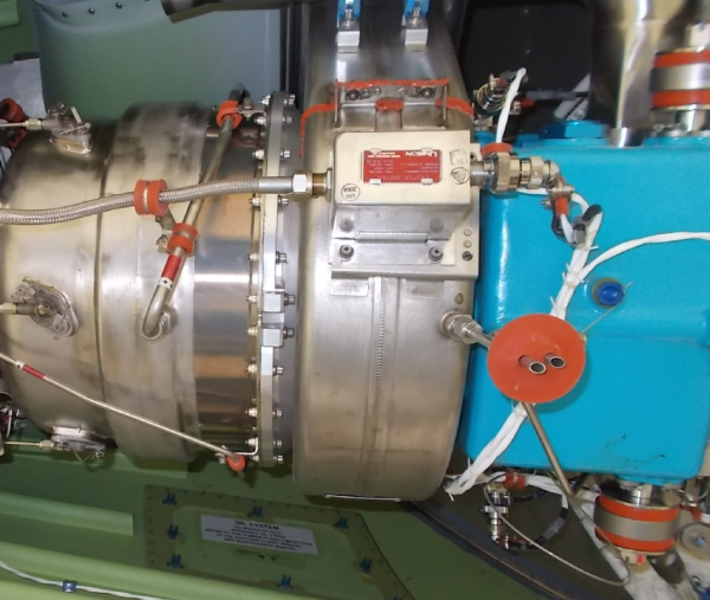
Starter Motor
The starter motor is attached to the APU with four bolts. The drive shaft of the starter motor has splines which engage a sprag clutch. Its usual input voltage is approximately 28 VDC and it is specified for an output of 2.75 hp (2050 W) at 18.5 VDC, 160 A, and 7,900 rpm. The maximum current necessary for the starter motor can be as high as 1000 A. The motor has properties of operation which change in relation to the altitude and the ambient temperature. These properties of operation are:
- The output torque
- The quantity of current used
- The time of operation
APU Control Panel
The location of the APU control panel is in the center pedestal, between the pilots' seats. The panel has one three-position switch for the OFF, RUN and START functions. Moving the switch to the OFF position sends a signal to the electronic control unit (ECU) to shut down the APU. The ECU then does a functional check of the overspeed shutdown function. Moving the switch to the RUN position energizes the ECU circuits and starts ECU subsystem and memory tests. This power-up sequence is completed in approximately three seconds. When the tests are done, the ECU starts ARINC 429 communication and goes to idle mode. To make the APU start, the switch must be held in the START position for approximately one second. The starter motor and the ignition system are then energized.
There is an APU FIRE pushbutton in the ENGINE panel immediately forward of the APU control panel. When the APU FIRE pushbutton is pushed, a signal is sent to the ECU which immediately initiates an APU shutdown. When the FIRE EXT 2 pushbutton is pushed, the extinguishing bottle releases its contents into the two fire extinguisher nozzles in the APU compartment. The ECU also sends a signal to the EICAS to show the APU SHUTDOWN advisory (cyan) message.


04/23/18
Operation
Ignition System
The electronic control unit (ECU) uses 28 VDC power from the R BATT BUS to energize the ignition system during the ignition/start sequence. The ignition system then causes intermittent electrical sparks at a specified rate, controlled by the ECU. The ignition system is energized at 10% APU rpm and stays energized until 99% rpm. If a flameout occurs, the ECU energizes the ignition unit via the auto relight function, which automatically starts ignition.
Starting System
When RUN is set on the APU control panel, the ECU is supplied with power. At this time the right DC boost pump is energized, which pressurizes the APU fuel line. The ECU does a BIT procedure to examine the engine control system to make sure the system components are in correct operation. This BITE test will continue for approximately three seconds.
When START is selected on the APU control panel, the ignition unit and the fuel control shutoff valve are energized. The starter motor operates when the APU start contactor is energized, through a signal from the ECU. This provides power to the APU starter from the right battery. The right battery contactor is opened* to isolate the right battery from the right essential bus during APU start to prevent a voltage drop on the essential bus. The left battery maintains power to the left and right essential busses during APU start.
*Note:
When the right battery contactor is opened, the R BATT OFF light momentarily illuminates, and the R BATT flowline on the EICAS ELECTRICAL synoptic page momentarily turns white.
When the start contactor is energized, the starter motor turns a gear in the APU gearbox, through a sprag clutch, which causes the APU rotor to turn. At 50% APU speed, the start contactor is de-energized by the ECU. The sprag clutch then mechanically disengages the starter motor and the APU continues to increase to 100% speed without more help from the starter. During a shutdown, the starter motor can start the APU again when the APU decreases to less than 10% speed.
APU speed and exhaust gas temperature are indicated on the EICAS status page. The display is activated by the avionics system through ARINC 429 communication from the ECU.
The APU STARTER FAIL ON caution message will show when the electrical power is supplied to the APU starter when not commanded by the ECU. The APU FAULT advisory message will show when a fault in the APU system prevents a start attempt.
The EICAS messages that follow are related to the starting system:
| EICAS MESSAGE(S) | LEVEL (COLOR) |
| APU STARTER FAIL ON | CAUTION (amber) |
| APU FAULT | ADVISORY (cyan) |
