

01/23/25
Message Overview:
Message Name:
APU DOES NOT START
| Identifier: | 494OBS001 |
| Effectivity: | AIRCRAFT 20501 - 20999 |
| System: | APU |
| System Description: | 49-00-00 - APU System |
| Schematic Diagram: | 49-61-00 - Engine Control System |
| Wiring Diagram: | 49-61-01 Sheet 1 - APU Electronic Control Unit (ECU) - ALL 49-61-01 Sheet 2 - APU Electronic Control Unit (ECU) - ALL |
Message Description:
The APU does not start. This condition could be observed on the ground or in flight.
Possible Causes:
- APU Starter Motor (B4)
- Ignition Unit (A173)
- Igniter Plug
- Exhaust Gas Temperature (EGT) Sensor (TC2) - (also known as Thermocouple T5)
- APU Fuel SOV (HP4)
- APU Low Oil Pressure Switch (S110)
- APU Wire Harness
- Load Control Valve (V8)
- Associated Wiring
Troubleshooting Tips:
Advisory Wire/Service Bulletin: None
Full Throttle Blog/Forum Articles/Infoservice/Newsletter: None
Flight Operation Notifications Manual (FONM): None
NOTES:
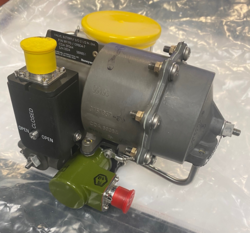
- The APU Load Control Valve may cause an APU No Start condition. Review the Current Faults in the MDC looking for MDC Faults associated with the Load Control Valve.
- The Load Control Valve is spring loaded closed and has a visual position indicator that can be referenced for valve position.
Quick Links:
| Data Download from the Maintenance Diagnostic Computer (MDC) | AMM 45-45-01-970-802 |
| Removal of the Fuel Control Unit | AMM 49-31-01-000-801 |
| Installation of the Fuel Control Unit | AMM 49-31-01-400-801 |
| Removal of the Fuel Solenoid Valve | AMM 49-31-09-000-801 |
| Installation of the Fuel Solenoid Valve | AMM 49-31-09-400-801 |
| Removal of the Ignition Unit | AMM 49-41-01-000-801 |
| Installation of the Ignition Unit | AMM 49-41-01-400-801 |
| Removal of the Igniter Plug Lead | AMM 49-41-05-000-801 |
| Installation of the Igniter Plug Lead | AMM 49-41-05-400-801 |
| Removal of the Igniter Plug | AMM 49-41-09-000-801 |
| Installation of the Igniter Plug | AMM 49-41-09-400-801 |
| Detailed Inspection of the APU Igniter Plug | AMM 49-41-09-220-801 |
| Removal of the Exhaust Gas Temperature (EGT) Sensor | AMM 49-61-05-000-801 |
| Installation of the Exhaust Gas Temperature (EGT) Sensor | AMM 49-61-05-400-801 |
| Wiring - Maintenance Practices - ALL | SPM 20-12-00-02 |
| Wire Repair - Maintenance Practices - ALL | SPM 20-12-10-02 |
| Electrical Connectors - Maintenance Practice - ALL | SPM 20-20-00-02 |
Troubleshooting Recommendations:
- Review the NOTES found in the Troubleshooting Tips: element of this page prior to the start of troubleshooting.
- Access the MDC to view fault messages. Are there any APU or APU component related fault messages?
- If YES, use the appropriate SmartFix Plus to troubleshoot these messages first.
- If NO, continue with next step.
- Access the APU enclosure and disconnect the APU Fuel SOV solenoid connector.
- Apply power to the aircraft and perform an APU start.
- Monitor the APU speed. The speed should increase to 26-28%.
- If the speed is good, continue with next step.
- If the speed is not good, replace the starter.
NOTE: If the APU starter is removed, make sure the starter clutch is inspected for damage.
- When the start is attempted, can you hear the "ticking" sound of the igniters?
- If YES, go to step 8.
- If NO, continue with next step.
- Remove the APU ECU. Disconnect the Ignition Unit connector A173P1. Perform a continuity check as follows:
From To Result A39CP1-2 A173P1-B A39CP1-4 A173P1-A - If there is continuity, continue with next step.
- If there is no continuity, repair defective wiring as required and do close out.
- Perform a continuity check as follows:
From To Result A39CP1-2 Ground A39CP1-4 Ground - If there is continuity, replace the Ignition Unit.
- If there is no continuity, continue with next step.
- Perform a detailed inspection of the APU igniter plug as per AMM 49-41-09-220-801. Check for erosion and gaps.
- If defects are found, replace the igniter plug and do close out.
- If no defects are found, continue with next step.
- Perform a wiring check between the APU ECU and the Low Oil Pressure (LOP) Switch as follows:
From To Result A39AP1-12A S110P1-A A39AP1-5D S110P1-B - If wiring defects are found, repair defective wiring as required and do close out.
- If no defects are found, continue with next step.
- Do wiring check between the APU ECU (A39) and the EGT Sensor (TC2) for the following wires
From To Result A39AP1-2A EGT Sensor Lug + (CR) A39A91-2A EGT Sensor Lug - (AL) - If the check is satisfactory, continue with next step
- If the check is not satisfactory, repair defective wiring
NOTE: Lugs must be disconnected from the EGT Sensor while doing the wiring check.
- Replace the EGT Sensor (TC2). Is the fault message still present?
- If NO, do close out
- If YES, continue with next step.
- Using WM 49-42-05, perform a wiring check between the APU ECU and the ADCPC APU Fuel Valve Relay (K96).
- If no defects are found, continue with next step.
- If defects are found repair defective wiring as required and do close out.
- Perform wiring checks between the ADCPC and the Fuel SOV.
- If no defects are found, continue with next step.
- If defects are found repair defective wiring as required and do close out.
- Contact the Bombardier Customer Response Center (CRC) for further troubleshooting steps.
- Do close out.