


Overview
The temperature control system consists of two hot air shutoff valves, two trim air check valves, a hot air check valve, three trim air valves and the various sensor inputs to the air conditioning system controllers required for operation and system protection.
The temperature control system controls temperature of the conditioned air. There are three temperature zones, the forward and aft passenger compartments and the flight compartment.
The temperature is controlled on the bleed/air conditioning control panel temperature selectors on the overhead panel. Ventilated temperature sensors measure the air temperature in each zone. You can also adjust the cabin temperature with the two temperature selectors installed in the passenger compartment.
Conditioned air from both air conditioning units is supplied to a mix manifold where it is blended for supply to the separate zones. To control the temperature to each zone, hot bleed air from the trim air system is injected at the outlet of the mix manifold to that zone.
The trim air system taps hot air from the flow control system through two hot air shutoff valves and supplies this hot air via three trim air valves to the mix manifold outlet to the zones. The amount of hot air supplied from the trim air valves depends on the temperatures selected. The air conditioning system controllers control the valves. Check valves are installed to protect the system.
Cold air (at a temperature approximately 15 °C (59 °F)) lower than the flight compartment and passenger compartment) flows from the mix manifold to the gaspers in the passenger compartments and flight compartment.
The trim air system may also be used as a third source of fresh air (auxiliary pressurization function) to pressurize and heat the cabin/cockpit in case both air conditioning units (packs) fail.

Air Conditioning Control Panel
The air conditioning panel contains switches and controls used for temperature control as follows:
TEMPERATURE Selectors
Three Temperature selectors are provided for the COCKPIT, FWD CABIN and AFT CABIN. These selectors provide a variable relative temperature selection between COLD (15 °C/59 °F) and HOT (35 °C/95 °F).
HOT/COLD Toggle Switches
These three position toggle switches directly affect the temperature control valve (TCV) on the ACU pack when the PACK CONTROL knob is set to the MAN mode. The crew can toggle the selector to HOT to increase the pack output temperature, or to COLD to decrease pack output temperature. Reference is made to the Air Conditioning Synoptic page to control pack temperature manually.
TRIM AIR PBA
The TRIM AIR switch is normally ON. When selected OFF, the OFF legend illuminates and both Hot Air Shutoff Valves (HASOV) close.
AUX PRESS PBA
When this guarded switch is selected, the ON light illuminates and the Auxiliary Pressurization mode is initiated which provides warm air to heat and pressurize the cabin in case of loss of both air conditioning packs.

Air Conditioning Synoptic Page
The temperature control system synoptic is part of the air conditioning synoptic. The air conditioning system synoptic displays:
Air Conditioning Synoptic
| Item | Green | Amber | White | Magenta | Cyan |
|---|---|---|---|---|---|
|
Zone Temperature (Cockpit, Forward Cabin, Aft Cabin) resolution of 1 °C. Note: |
Actual temperature | dashes if no data available | - - - | - - - | - - - |
| Duct Temperature (Cockpit, Forward Cabin, Aft Cabin) resolution of 1 | Actual Temperature | Value in Amber if duct temperature overheat. Dashes if no data available | - - - | - - - | - - - |
|
Selected Temperature. Note: |
- - - | - - - | - - - | - - - | Temp selected |
| L - R Pack discharge temperature | Value in green when in Auto Mode. Value in green if temperature is >5 °C and <80 °C if Manual Mode | Auto Mode: Value if pack discharge overtemp. Manual Mode: Value if HI TEMP message is displayed | - - - | - - - | - - - |
| L - R Pack Box | Air flow from FCV | Pack failed | Pack not operating | data not available | - - - |
| Message in Pack Box | - - - | HI TEMP message when pack overtemp | MAN message displayed if Manual. mode selected | - - - | - - - |
| Hot Air Shutoff Valves | - - - | Valve Failed | Normal Operation | no data available | - - - |
| Trim Air Valves | - - - | Valve Failed | Normal Operation | no data available | - - - |

10/08/19
Hot Air Shutoff Valves (HASOV)
The hot air shutoff valves control the hot air from the bleed air system that goes to the trim air system.
The shutoff valves have an electric actuator that opens and closes a butterfly valve. The butterfly valves have three positions:
- Fully open
- Fully closed
- Half open
A switch on each valve supplies the air conditioning system controllers with an indication of which position the valve is in. The air conditioning system controllers control the position of the hot air shutoff valves. When power is removed, the shutoff valves stay in their last position.
The shutoff valves are installed in the aft equipment compartment.


Trim Air Check Valves (TACV)
There are two trim air check valves (TACV) installed in the aircraft; one downstream of each HASOV.
The trim air check valves have two flaps installed on a hinge pin. A spring keeps the flaps in the closed position. The valves open when the pressure overrides the spring and holds the flaps open against a stop pin.
The trim air check valves prevent the flow of bleed air through the hot air shutoff valves in the incorrect direction. The trim air check valves are installed in the flanges of the hot air shutoff valves in the aft equipment compartment.

Hot Air Check Valve
The hot air check valve has two flaps installed on a hinge pin. A spring keeps the flaps in the closed position. The valve opens when the pressure overrides the spring and holds the flaps open against a stop pin.
The hot air check valve is installed in the pressure bulkhead of the aft power distribution/ECS compartment, upstream of the trim air valves. This valve prevents reverse flow from the pressurized cabin to atmosphere in case of a duct breakage between the Trim Air Check Valves and the aft pressure bulkhead.


04/28/16
Trim Air Valves (TAV)
The three trim air valves adjust the temperature of the air in each of the three supply ducts. They add hot air to the airflow from the mix manifold. The left trim air valve adds hot air into the aft passenger compartment distribution system. The center trim air valve adds hot air to the flight compartment distribution system. The right trim air valve adds hot air to the forward passenger compartment distribution system.
Each of the three trim air valves has an electric motor that opens or closes a butterfly valve. The air conditioning system controllers control the position of the valves. The air conditioning system controllers receive electrical signals from the three ventilated temperature sensors and compare them to the signals from the three duct temperature sensors.
The air conditioning system controllers then open or close the applicable valve to adjust the temperature as required. Microswitches on each of the trim air valves monitor the fully closed or fully open position of the valves.
The MAN TEMP switch on the bleed-air control panel overrides the automatic control of the trim air valves when the switch is pushed in. The trim air valves close when this switch is pushed in. When the EMER PRESS switch on the bleed-air control panel is pushed in the trim air valves open fully.
An error occurs if a trim air valve stays open (closed) for more than 40 seconds after the air-conditioning system controller tells it to close (open). A TRIM AIR FAULT message is displayed on EICAS. The air-conditioning system controller closes the hot-air shutoff valves and the other trim air valves. The temperature control is not fully operational because it is not possible to control the three temperature zones independently.
The trim air valves are installed between the three supply ducts and the trim manifold duct in the aft power distribution/ECS compartment.


Mix Manifold Temperature Sensors
Two mix manifold temperature sensors (MIXTS) are installed in the Mix Manifold. MIXTS 1 is connected to ACSC 1 while MIXTS 2 is connected to ACSC 2.
These sensors provide a measurement of the Mix Manifold temperature to the ACSCs for temperature control, temperature limitation and overheat warning.

Duct Temperature Sensors
The duct temperature sensors measure the temperature of the airflow in the supply ducts to the flight compartment and the aft and forward passenger compartments.
The sensor output signals go to the air conditioning system controllers which monitor temperature changes, temperature limits and overheat warning. The sensors have a temperature transducer in a protective housing. The housing lets the air go around the transducer and prevents damage to it. The sensors are installed sufficiently away from the mix manifold to let the hot air and the cold air mix.
An error occurs if the temperature of a supply duct goes higher than 194 °F (90 °C) for more than 30 seconds. The air conditioning system controller will close the applicable trim air valve. If the error continues for 20 seconds both hot-air shutoff valves will close. The temperature control is not fully operational because it is not possible to control the three temperature zones independently. When emergency pressurization is selected, the duct temperature limit goes to 248 °F (120 °C) for 10 seconds. A TRIM AIR FAIL message is sent to the EICAS.
The duct temperature sensors are installed on the flight compartment and the passenger compartment supply ducts, in the aft power distribution/ECS compartment.


04/05/22
Ventilated Temperature Sensors
The ventilated temperature sensors measure the temperature in the flight compartment and in the aft and forward passenger compartments. The ventilated temperature sensors send electrical signals to the air conditioning system controllers. The forward and aft cabin temperature sensors are connected to ACSC one, while the sole cockpit temperature sensor is connected to ACSC two. Each ventilated temperature sensor consists of two temperature transducers. It includes a fan to let the air go around the sensing element.
Note:
It is important to make sure that the temperature sensors are not obstructed by any objects that could hinder free airflow into the sensor.
If one of the transducers is not correct, the air conditioning system controller uses the other sensor and sends a L-R PACK FAULT message to the EICAS. The same message is sent if both transducers of a sensor are not correct or the applicable power supply is not on. The ventilated temperature sensors are installed in the flight compartment, the forward passenger compartment, and the aft passenger compartment.


Air Conditioning System Controllers
There are two air conditioning system controllers for each air conditioning unit.
Each air conditioning system controller has two channels; A and B. Each air conditioning system controller only uses one channel a day; channel A - on odd days, and channel B - on even days.
Channel A, Channel B, and the Manual board each have their own 28 VDC power supply. The power supply for the Manual Board is isolated from the power supply of Channel A and Channel B.
The air conditioning system controllers operate their temperature control systems automatically. The air conditioning system controllers receive inputs from the control panel, temperature sensors, pressure sensors, and various valves. Airflow in the main avionics compartment over the air conditioning system controller keeps the temperature correct.
To set the temperature, the air conditioning system controllers receive inputs from the COCKPIT, FWD CABIN, and AFT CABIN temperature selectors on the control panel.
Temperature selectors in the forward and aft passenger compartments change the temperature signal to the air conditioning system controller for each zone. The air conditioning system controller keeps the temperature in each zone from 15 to 35 °C (59 to 95 °F) as selected.
Temperature selectors in the forward and aft passenger compartments change the temperature signal to the air conditioning system controller for each zone. The air conditioning system controller keeps the temperature in each zone from 15 to 35 °C (59 to 95 °F) as selected.
The air conditioning system controllers receive inputs from each of the ventilated temperature sensors of the three zones. The air conditioning system controller calculates the difference between the temperature selection signal and the actual temperature measurement of each zone. This gives an error signal for each of the three zones. This error signal controls the trim air valve speed of each of the three supply ducts. When the zone temperature error becomes null, the applicable duct temperature stays the same. During normal operation, each duct temperature can change from 10 to 70 °C (50 to 158 °F). During pull up and pull down operations, the applicable duct temperature can change from 3 to 85 °C (37 to 185 °F).
The air conditioning system controller also controls the pull up/pull down mode. The pull up/pull down mode comes on if the difference between the forward and aft passenger compartments is more than 10 °C (14 °F). The pull up mode is switched to off when the difference decreases below 0 degree. The pull down mode is switched to off when the difference increases above 0 degree.
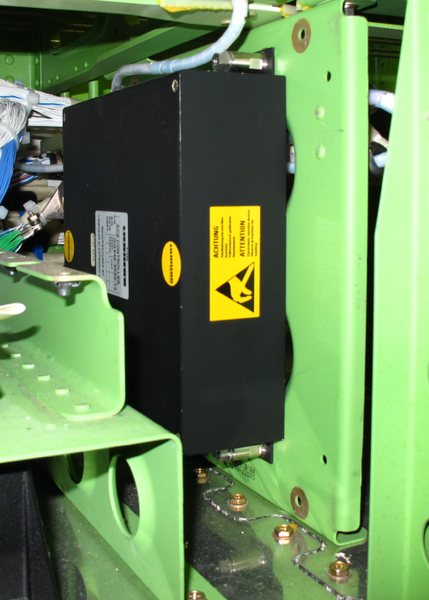
When the manual mode is selected on the bleed-air control panel, the air conditioning system controller does not control the system. The air conditioning system controllers are installed in the main avionics compartment.

08/21/24
System Operation

Cabin Temperature Control
Conditioned air is forced by the Distribution and Recirculation System into the two zones of the cabin (forward and aft). The airflow temperature depends on the heating or cooling requirement of the zone. The ACSC uses the actual temperature in the zone, as measured by a Ventilated Temperature Sensor, and correlates this value to the temperature selected for each zone from the cockpit, or passenger controls in the cabin. The result is to obtain the selected temperature and maintain it within 3 °C (37 °F) of the selected temperature.
Note:
Although not installed in the factory, most aircraft completion centers install separate cabin zone temperature controls in the passenger compartment.
The individual overhead outlets (gaspers) in the cabin are supplied with colder air from the mix manifold and controlled at a temperature lower than the cabin temperature.
Cockpit Temperature Control
Conditioned air is forced by the distribution and recirculation system to the cockpit distribution duct. The ACSC uses the actual temperature in the cockpit, as measured by a Ventilated Temperature Sensor, and correlates this value to the temperature selected for the cockpit. The aim is to reach the selected temperature and maintain it within 3 °C.
The individual overhead outlets (gaspers) in the cockpit are supplied with colder air from the mix manifold (MIXM) and controlled at a temperature lower than the cockpit temperature.
Distribution Duct Temperature Control
The duct temperature demand is function of the difference between the temperature selection and the measured temperature performed by the ventilated temperature sensor (VENTS). The duct temperature demand is used by ACSC to drive TAV speed.
The speed is proportional to the difference between this temperature demand and the actual temperature measured by the duct temperature sensor (DTS). During normal operation, the duct temperature demand is limited between +10 °C (50 °F) and +70 °C (158 °F) to provide proper passenger comfort. During pull up and pull down operations, the duct temperature demand is limited between +3 °C (37 °F) and +85 °C (185 °F) to provide maximum heating and cooling capacities.
Mix Manifold Temperature Control
The temperature inside the Mix Manifold is controlled by the ACS Controller by adapting the pack temperature demand to the duct temperature demand required by each zone.
If the mix manifold temperature is too high or too low, the recirculation fan (RFAN) speed is increased to supply more recirculated airflow into the mix manifold.
In normal operation, the mix manifold temperature is controlled to keep a temperature offset of 15 °C less than the cabin temperature demand, or controlled to the lowest value of duct temperature demand when the pull up/pull down mode is initiated.
Pack Temperature Control
The cooling pack heating or cooling capacity is controlled by the ACSC which adjusts the mixture of cold air flow from the turbine and the hot air flow from the bleed air supply system by controlling the temperature control valve (TCV) position.
Pack output temperature will normally be driven to a temperature 15 °C lower than the minimum selected temperature in all three zones. For example, if cockpit and forward temperatures were selected to 20 °C (68 °F), and the aft cabin temperature was selected to 15 °C (59 °F), the minimum selectable temperature, the output of both packs would be driven to 0 °C (32 °F).
In pull up or pull down operations, the cooling pack temperature demand is a function of the lowest value of the three duct temperature demands. This control is superseded by the limitation of the water extractor temperature to prevent icing. Ice built-up downstream of the ACM turbine is monitored by the ACSC by comparing the pressure measured by the Pack Discharge Pressure Sensor (PDPS) with a maximum acceptable limit.
Manual Mode
When MAN is selected on the PACK CONTROL selector in the cockpit, the manual control mode overrides the automatic mode of the ACSC which is no longer active. Since only one pack should be operated in the MANUAL mode, the crew must select the inoperative pack to OFF.
In the Manual Mode, all the trim air valves are driven to the closed position and the trim switch should be selected Off. The temperature control valve will remain in position and can be opened and closed by the COLD/HOT MAN TEMP toggle switch on the air conditioning panel. The pack discharge temperature is indicated on EICAS and can be monitored. Freezing (60 °C) (140 °F) are displayed on the EICAS synoptic page.
Trim Air Operation
In normal mode, the HASOV is driven by the associated ACSC to its intermediate (or partial open position).
The PACK CONTROL selector, on the bleed-air control panel, overrides the automatic control of the shutoff valves when it is selected to MAN. The shutoff valves and the trim air valves close. Toggle switches on the bleed-air control panel then control the temperature of the system. They open and close manually the temperature control valve of each air conditioning unit. When the AUX PRESS switch on the bleed-air control panel is pushed in, the shutoff valves go to half open position, and the trim air valves open fully. This lets the trim air system supply auxiliary pressurization and heating.
An error occurs if the hot air shutoff valves stay open for more than 10 seconds after the air conditioning system controller tells them to close. A TRIM AIR FAULT message is displayed on the engine-indicating-and-crew-alerting system (EICAS).
The positions of the TAVs are controlled by the ACSC.
The ACSC controls the temperature in the distribution ducting, to prevent an overheat situation, by controlling the corresponding TAV position. An error occurs if the temperature of a supply duct goes higher than 194 °F (90 °C) for more than 30 seconds. The air conditioning system controller will close the applicable trim air valve. If the error continues for 20 seconds, both hot air shutoff valves will close.
In case of leak detected by the bleed management controller (BMC), the ACSC switches off the HASOVs and the three TAVs. A TRIM AIR LEAK caution message is displayed on EICAS.
Auxiliary Pressurization Mode
When this mode is selected, the bleed air supply is cooled to the lowest possible temperature by the opening of the Fan Air Valve. All the trim air valves are opened in order to supply the maximum airflow to pressurize the fuselage. The ACSC monitors for an eventual overheat in the distribution ducting.
When the AUX PRESS guarded switch on the cockpit panel is selected ON, the pneumatic temperature thermostat is switched to its low temperature level by a direct signal. Consequently, the fan air valve is driven to the full open position.
These actions are taken to reduce bleed air temperatures to a minimum. In addition, both flow control valves are closed by energizing their solenoids. The hot air shutoff valves go to the half open position and all the trim air valves are driven to the full opened position. The recirculation fans are maintained ON.
The normal mode overheat detection feature is inhibited in this mode. Duct temperatures are only displayed on EICAS for information. A duct overheat message is sent by the ACSC to EICAS if the temperature increases above 120 °C for more than 10 seconds.
Pull Up and Pull Down Control
If the ACS controller detects a large difference between forward/aft cabin zone temperature selectors and their corresponding zone temperatures, it starts a pull up or a pull down logic. The pull up/pull down mode is switched on if cabin error (in all three zones) is out of range (> ±10 °C).
The cooling pack is controlled to the maximum heating or cooling mode limited only to prevent pack discharge overheating or water extractor freezing. The mix manifold is only controlled to prevent overheating or freezing. The flow control system and the recirculation fans set to the maximum value. This mode is switched off when any zone temperature comes within its normal operating range.
System Monitoring
The ACSC performs failure detection functions. When a failure is detected, the software performs the following actions:
- Corrective action. For example, if channel A fails, channel B will be used
- Generate EICAS message
- Generate a CAIMS report
Power On Built In Test (PBIT)
Power On Built In Tests (PBIT) are performed automatically on the active channel on power up (whenever AC power is on line) after a power interruption greater than 200 ms (cold start) except in the following circumstances:

When PBIT is authorized after a cold start, the software checks the following:
- CPU, RAM
- Temperature Control Valve (TCV)
- Trim Air Valves (TAV)
Continuous Built In Test (CBIT)
During continuous built in test (CBIT), the following components are tested:
- Controller
- Sensors (range/disagreement)
- Valves (switch position vs. command)
If a failure is detected, a CAIMS report is generated and, in certain failure cases, a CAS message is also generated.
System Test
Initiated Built In Test (IBIT)
The air conditioning system controllers can be tested via CAIMS. The following logic applies:

During IBIT, the following items on each channel are tested:
- Internal test (EPROM, RAM, EEPROM, WATCHDOG, RS 422 and ARINC)
- FCV pneumatic valve test
- HASOV open/full close test
- TCV, TAV, FLV speed test
- Input tests
If a failure occurs the CBIT, which is continuously operating, will detect and report the failure; a CAIMS report will be generated, and for certain failure conditions, a CAS message will also be generated. Should a sensor or valve fail, the appropriate CAIMS report will be generated, identifying the failed unit. If the failure has occurred within the ACSC, a generic CAIMS report will be generated.
CAIMS Raw Data
The air conditioning system status is displayed in the "System Diagnostics / LRU Test" pages on the CAIMS PMAT.
The data is real time meaning that it will display current operating parameters. This data is presented in "user friendly" terms, such as temperature in °C, pressure in PSIG, position of switches and components, rather than digital codes.
Pack temperatures that are displayed are:
- Pack inlet temperature
- Compressor discharge temperature
- Water extractor temperature
- Pack discharge temperature
- Mix manifold temperature
Switch positions are displayed as well as valve positions for:
- Flow control valves
- Ram air valve
- Hot air shutoff valves
- Trim air valves
- Temperature control valves
- Fan air valves
Pressures that are displayed are:
- Pack inlet pressure
- Pack flow differential pressure
- Pack anti-ice pressure
Measured pack flow is displayed in lb./min.
For each zone, duct temperature and ventilated sensor temperature are also displayed.
08/28/20
Component Location Index
| Component Location Index | |||
|---|---|---|---|
| IDENT | DESCRIPTION | LOCATION | IPC REF |
| - | HOT AIR CHECK VALVE | ZONE(S) 171/172 | 21-60-01 [ GX ] [ GXRS ] [ G5000 ] |
| - | TRIM AIR CHECK VALVE | ZONE(S) 311/312 | 21-60-05 [ GX ] [ GXRS ] [ G5000 ] |
| L20/L27 | HOT AIR SHUTOFF VALVE | ZONE(S) 311/312 | 21-60-09 [ GX ] [ GXRS ] [ G5000 ] |
| L18/L19/L26 | TRIM AIR VALVE | ZONE(S) 171/172 | 21-60-13 [ GX ] [ GXRS ] [ G5000 ] |
| E21/E22/E28 | DUCT TEMPERATURE SENSOR | ZONE(S) 171/172 | 21-60-17 [ GX ] [ GXRS ] [ G5000 ] |
| A87/A88 | AIR CONDITIONING SYSTEM CONTROLLER | ZONE(S) 141/142 | 21-60-21 [ GX ] [ GXRS ] [ G5000 ] |
| B15/B16/B20 | VENTILATED TEMPERATURE SENSOR | ZONE(S) 221/232/242 | 21-60-25 [ GX ] [ GXRS ] [ G5000 ] |