

05/30/16
Overview
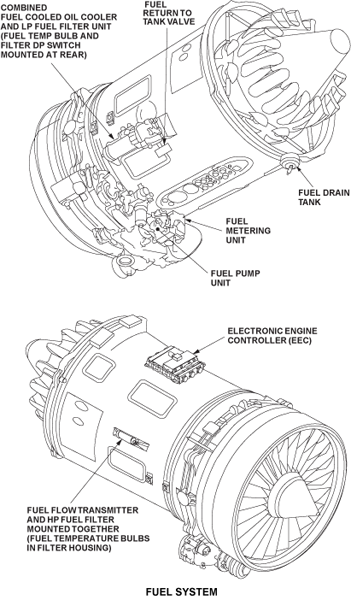
The function of the engine fuel and control system is to supply the fuel which is burned in the combustion section. It also uses fuel for hydraulic operation of the variable stator-vanes. The main components related to the operation of the engine fuel system are the throttle levers and the engine fuel control switches in the flight deck. The FADEC system provides control of the fuel system using a High Pressure Fuel Pump and a Fuel Metering Unit (FMU).
The fuel and control system supplies sufficient fuel to the combustion section for satisfactory engine operation during all ground/flight conditions. Fuel is supplied to the combustion section at a flow rate which agrees with the engine thrust set in the flight compartment. The primary function of the fuel system is to pump and meter fuel to the engine in accordance with the demands generated by the engine electronic controller (EEC). The EEC automatically keeps the thrust at the level set with the thrust levers. This is done for all changes of air temperature and pressure. Engine shaft speeds, exhaust gas temperatures (EGT) and other limits are also kept at safe values. The metering requirements fall into three main categories. The engine must be able to:
- Maintain a steady running state at various power levels set by the crew
- Provide smooth, surge-free, maximum rate accelerations
- Decelerate rapidly without risking flameouts
During steady operation of the engine, an increase in fuel flow initially gives rise to a back pressure which restricts compressor air delivery, which must be limited to avoid an unstable compressor airflow (engine surge).
The delivery from the HP fuel pump (which is a gear-type pump) will always be in excess (approximately 120%) of engine demand. The excess over demand is returned to the HP pump inlet, and is referred to as engine "fuel spill". The excess return fuel can be diverted through the fuel return to tank (FRTT) valve operation to circulate heated fuel back into the aircraft wing tanks. Control of the fuel spill allows acceptable levels of over fueling/ acceleration or under fueling/deceleration as required.
In addition to fuel metering requirements, the system supplies HP servo fuel to the variable stator vane (VSV) actuator described in section C, under the heading compressor airflow control.