


08/16/19
Message Overview:
| DDG Reference: | 49-10-01 |
| Pilot Action (QRH): | ABNORM 4-4 |
| System Description: | 49-90-00 |
| Schematic Diagram: | 49-61-00 [ Global Express ] [ G5000 ] [ Global XRS ] |
| Wiring Diagram: | 49-61-01 [ Global Express ] [ G5000 ] [ Global XRS ] |
Fault Description:
Oil temperature of the APU is more than 300°F (148.9°C) for ten seconds while the aircraft is in the air, or during a main engine start sequence.

| Fault | See * below | Description |
|---|---|---|
| FADEC FAILURE | ECU internal failure (CPU, watchdog timer, O/S circuit failure, loss of O/S protection, etc.). | |
| O/SPD | (Hardware/Software) overspeed circuits tripped (at 106%). | |
| LOSS OF SPEED | Both monopoles failed. | |
| LOSS OF O/SPD | FADEC overspeed circuit/FCU fuel output solenoid failed. | |
| OVERTEMP | * | EGT limit exceeded during i) start ii) on-speed operation |
| FIRE EMERG | * | Fire signal is received by the FADEC. |
| REVERSE FLOW | * | T2 temp. limit (176.6°C/350°F) has been exceeded for 5 secs. |
| HIGH OIL TEMP | * | Oil temp limit of >148.9°C exceeded for 10 seconds. |
| LOW OIL PRESS | * | Oil pressure has fallen below lower limit of 30 psig for 15 seconds, with rpm > 95%. |
| LOSS OF EGT DETECTION | * | Both EGT thermocouples have failed (NOTE: In Essential Mode, FADEC programs an EGT of 260°C to maintain the APU running). |
| NO FLAME | EGT rise has not been detected within 17 seconds of fuel solenoid being commanded open by FADEC, or rpm >18% for 5 seconds. |
|
| NO ACCEL | Acceleration is < 0.05% of the prescheduled rate (normal acceleration is 2.5% per seconds). |
|
| SLOW SPEED | Starter timer expired - APU rpm > 5% and less than starter cut out for 30 seconds. | |
| UNDER SPEED | * | Speed has reached 100%, then drops below 80% for 5 secs. |
| NO CRANK | rpm does not rise above 5% within: a) 2 secs. when oil temp is warmer than minus 23°C, or b) 50 secs. when oil temp is minus 23°C or lower. |
|
| INLET DOOR | Inlet door position indicates closed 30 secs before starter engagement, or 600 msecs. after starter engagement. |
|
| LOSS OF DC POWER | Loss of 28 VDC power for 200 milliseconds. | |
| LOP SW FAIL | * | Oil pressure switch has failed open when rpm is < 7%. (NOTE: This switch is normally closed during prestart BITE). |
| FALLBACK | APU drop below 25% rpm after starter cutout | |
| APU GCU HIGH OIL TEMP | * | APU Generator oil temperature above 215°C |
| NOTE: An asterisk mark (*) in any row above means that the automatic protection shut down on that row is inhibited if the associated fault occurs in flight. The respective CAS message, or an advisory message reading APU FAULT will be displayed in the CAS window and the APU will not shut down automatically in flight. However the pilot may select to shut down the APU manually by placing the APU control switch to OFF. | ||
Possible Causes:
- Low Oil Quantity
- Auxiliary Power Unit (APU) Air Inlet Door (not opening correctly)
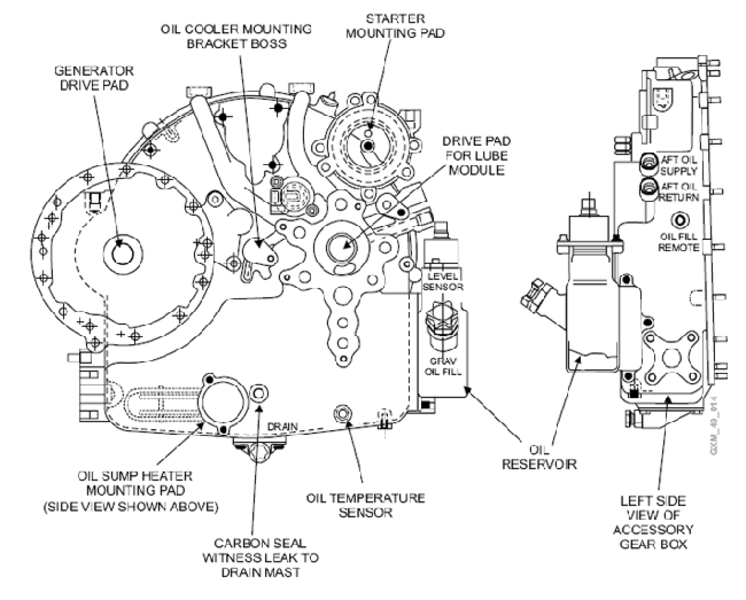
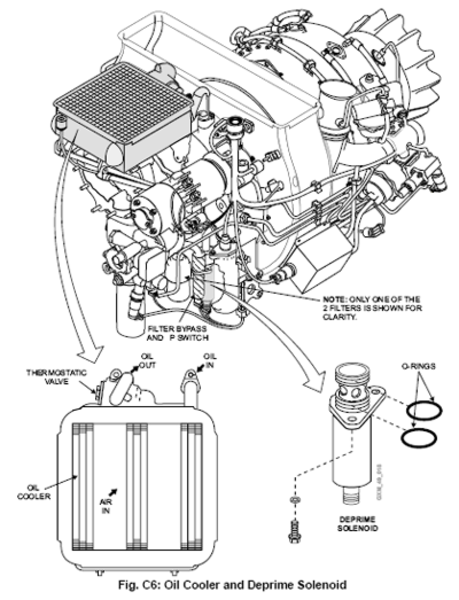
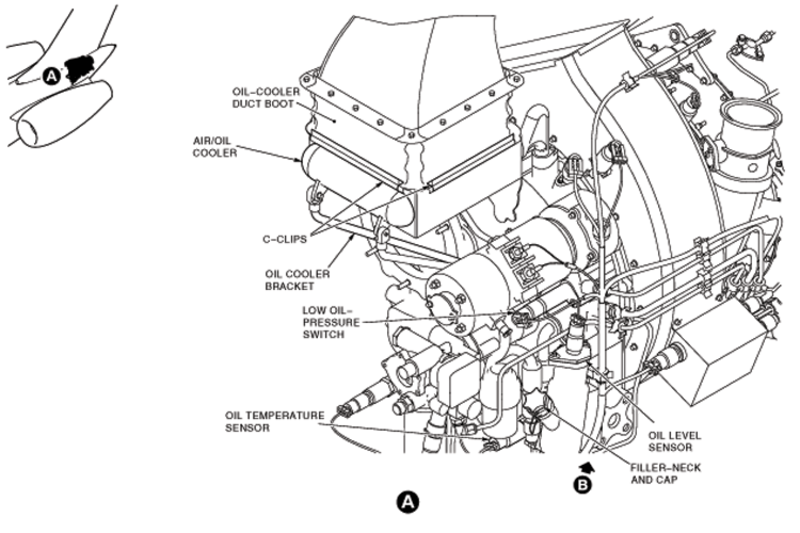
- Blockage in the Air/Oil Cooler Duct or Oil Cooler
- Oil Temperature Sensor
- Oil Cooler Thermostatic/Pressure Relief Valve
- Auxiliary Power Unit (APU) Full Authority Digital Engine (Electronic) Control (FADEC)
- Associated Wiring
Troubleshooting Tips:
Advisory Wire/Service Bulletin: None
Forum Articles/Infoservice/Newsletter: None
If CAS message is not active, verify stored flight faults on CAIMS, under system diagnostics, ATA 49.
The Thermostatic/ Pressure Relief Valve is normally a non field replaceable item. It will be included in the Oil Cooler Assembly
Quick Links:
| Access to Active Faults | AMM 45-45-00-970-802 [ Global Express ] [ G5000 ] [ Global XRS ] |
| Access to Stored Faults | AMM 45-45-00-970-803 [ Global Express ] [ G5000 ] [ Global XRS ] |
| Access to System Diagnostics | AMM 45-45-00-970-804 [ Global Express ] [ G5000 ] [ Global XRS ] |
| Quantity Check of the Oil Supply in the APU | AMM 12-14-09-610-801 [ Global Express ] [ G5000 ] [ Global XRS ] |
| Servicing of the APU Oil Supply | AMM 12-14-09-612-801 [ Global Express ] [ G5000 ] [ Global XRS ] |
| Operational Test of the Inlet Door | AMM 49-14-01-710-801 [ Global Express ] [ G5000 ] [ Global XRS ] |
| Removal of the Oil Temperature Sensor | AMM 49-90-01-000-801 [ Global Express ] [ G5000 ] [ Global XRS ] |
| Installation of the Oil Temperature Sensor | AMM 49-90-01-400-801 [ Global Express ] [ G5000 ] [ Global XRS ] |
| Removal of the Air/Oil Cooler | AMM 49-90-37-000-801 [ Global Express ] [ G5000 ] [ Global XRS ] |
| Installation of the Air/Oil Cooler | AMM 49-90-37-400-801 [ Global Express ] [ G5000 ] [ Global XRS ] |
| Removal of the Full Authority Digital Engine Controller (FADEC) | AMM 49-61-01-000-801 [ Global Express ] [ G5000 ] [ Global XRS ] |
| Installation of the Full Authority Digital Engine Controller (FADEC) | AMM 49-61-01-400-801 [ Global Express ] [ G5000 ] [ Global XRS ] |
| APU Electrical Harness Wiring Diagram 49-12-00 | WM 49-12-00 [ Global Express ] |
| Wire Repair | SPM 20-12-10 [ Global Express ] [ G5000 ] [ Global XRS ] |
Troubleshooting Recommendations:
- Visually check the oil quantity in the APU.
- If APU oil level was low, investigate absence of APU OIL LO QTY, CAS (cyan) message.
- If system checks are good, do close out.
- If fault remains, continue with next step.
- On CAIMS verify if fault FADEC CONTROLLER is active.
- If active, r-rack the FADEC and verify connector A108BP1, pins B-G6, B-H6 and B-J6 for damage or FOD.
- If fault FADEC CONTROLLER is still active, replace the FADEC.
- If the FADEC CONTROLLER is not active, continue with next step.
- Verify that the APU air intake inlet door opens fully per AMM TASK 49-14-01-710-801
(DO NOT START THE APU, put the APU control panel knob in the run position only and verify door position visually and on APU DATA status page).- If system checks are good, do close out.
- If fault remains, continue with next step.
- Inspect the air inlet duct and oil cooler for FOD or signs of blockage.
- If system checks are good, do close out.
- If fault remains, continue with next step.
- Measure the oil temperature and cross-check resistance value between pin A and B of the oil temperature sensor (MT6P1).
ºC Ohms Resistance ºC Ohms Resistance -70 68.27 ±0.50 60 112.28 ±0.50 -60 71.19 ±0.50 70 116.27 ±0.50 -50 74.24 ±0.40 80 120.36 ±0.50 -40 77.39 ±0.40 90 124.55 ±0.50 -30 80.56 ±0.40 100 128.85 ±0.50 -20 83.77 ±0.40 110 133.26 ±0.50 -10 87.04 ±0.40 120 137.78 ±0.60 90.38 ±0.40 130 142.40 ±0.60 10 93.80 ±0.40 140 147.11 ±0.60 20 97.31 ±0.40 150 151.91 ±0.60 30 100.91 ±0.40 200 177.95 ±1.00 40 104.60 ±0.40 250 208.00 ±1.00 50 108.39 ±0.40 300 242.70 ±1.50 - Replace the oil temperature sensor if out of ranges above.
- If system checks are good, do close out.
- If fault remains, continue with next step.
- Perform wiring checks between APU FADEC and the oil temperature sensor connector (MT6P1).
- If system checks are good, do close out.
- If fault remains, continue with next step.
- Replace the oil cooler assembly (includes thermostatic/pressure relief valve as part of the assembly).
- If system checks are good, do close out.
- If fault remains, continue with next step.
- Replace the APU FADEC.
- Do close out.